published at 22 Mar 2026 In UGC
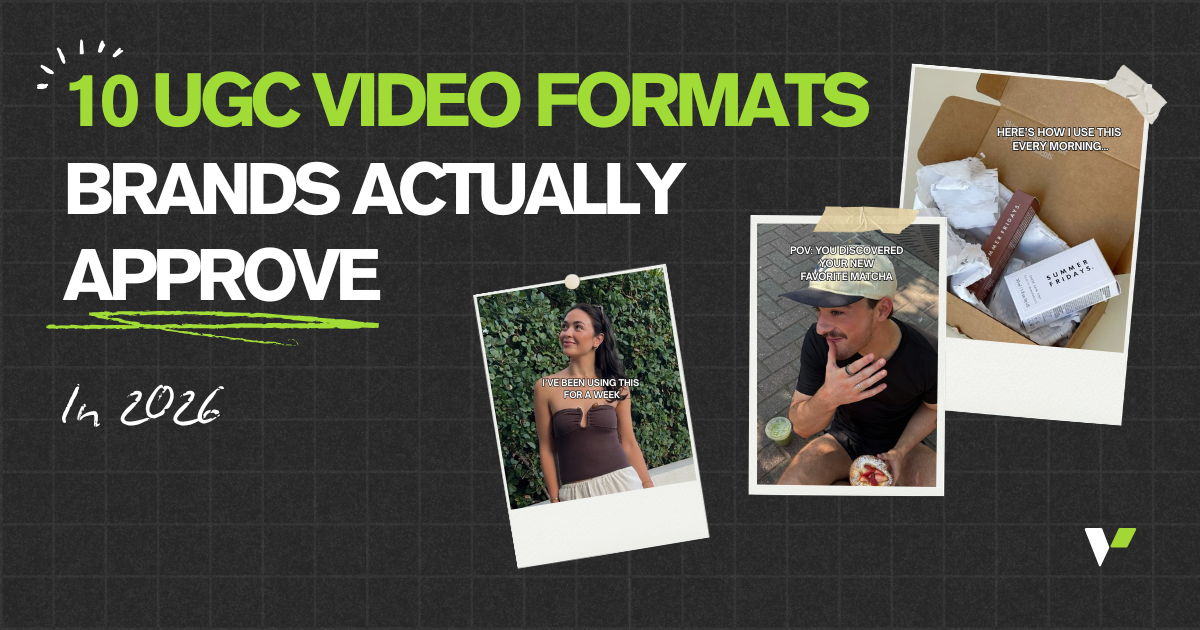
10 UGC Video Formats Brands Actually Approve
What UGC Formats Actually Are
UGC formats are simply repeatable ways of structuring a video.
They’re not random. They’re patterns that:
- hold attention
- communicate clearly
- and convert
Most high-performing UGC videos follow a format, even if it feels natural.
Why Formats Matter (And Why Brands Look for Them)
Most creators just “film content.” But brands don’t think like that. They think in terms of:
→ “What format will perform best?” That’s why they want creators who can:
- adapt to different formats
- test multiple angles
- and create content that still feels natural
If you only know 1–2 formats… you’re limiting yourself.
The more formats you understand, the more valuable you become.
How to Use This Guide
Don’t try to master all 10 at once.
Instead:
- Pick 2–3 formats
- Practice them
- Add them to your portfolio
That’s how you improve fast.
THE 10 FORMATS (Curate + Strategic)
Here’s the best list (not random, this is what brands actually use):
1. Problem → Solution
What it is: You start with a relatable problem, then introduce the product as the solution.
How to structure it:
- Hook → call out the problem
- Introduce the product
- Show how it solves it
- End with a result or benefit
What to say (example): “If you struggle with [problem]… this is what I started using.”
Why it works: This is one of the highest-converting formats because it immediately grabs attention and shows value.
2. POV Storytelling
What it is: A relatable scenario that feels like a real-life moment.
How to structure it:
- Hook → “POV:” setup
- Show the situation
- Introduce the product naturally
- Light payoff
What to say (example): “POV: you finally found a product that actually works.”
Why it works: Feels native to TikTok and Instagram, so it doesn’t come off like an ad.
3. Tutorial
What it is: Teaching someone how to use the product step-by-step.
How to structure it:
- Hook → what they’ll learn
- Step-by-step process
- Show product in use
- Final result
What to say (example): “Here’s how I use this every morning…”
Why it works: Educational content builds trust and keeps people watching.
4. Product Demo
What it is: A simple breakdown of how the product works.
How to structure it:
- Introduce product
- Show key features
- Show how to use it
- Highlight benefit
What to say (example): “This is how this works…”
Why it works: Clear and easy for brands to turn into ads.
5. Testimonial / Review
What it is: Sharing your personal experience with the product.
How to structure it:
- Hook → your experience
- What you liked
- What changed
- Recommendation
What to say (example): “I’ve been using this for a week and here’s my honest thoughts…”
Why it works: Builds trust through authenticity.
6. Before / After
What it is: Showing a transformation using the product.
How to structure it:
- Before state
- Introduce product
- Show usage
- After result
What to say (example): “This is before I started using this… and this is after.”
Why it works: Visual proof makes it easy to understand results.
7. Lifestyle Demo
What it is: Showing the product naturally in your daily routine.
How to structure it:
- Routine clip
- Product use
- Natural integration
- Light mention
What to say (example): “This is part of my daily routine…”
Why it works: Feels organic and not forced.
8. Voiceover Story
What it is: Clips of the product with a voiceover explaining the story.
How to structure it:
- Film clips first
- Add voiceover after
- Tell a simple story
- Show product naturally
What to say (example): “I didn’t expect this to work, but…”
Why it works: High retention because it combines visuals + storytelling.
9. Hook + List Format
What it is: A quick list of reasons, tips, or benefits.
How to structure it:
- Hook → “3 reasons why…”
- List points quickly
- Show product
- Quick wrap-up
What to say (example): “3 reasons why I keep using this…”
Why it works: Fast, easy to watch, and highly shareable.
10. Comparison
What it is: Comparing the product to another option.
How to structure it:
- Introduce both options
- Show differences
- Explain preference
- Final choice
What to say (example): “I tried this vs this… here’s the difference.”
Why it works: Helps viewers make a decision quickly.
Save this for later 👇
Here’s a quick cheat sheet 🤫 you can use when filming your UGC videos.

Final Takeaway
Most creators fail because they:
- guess what to film
- or repeat the same style
Creators who grow fast understand formats.
That’s the difference.